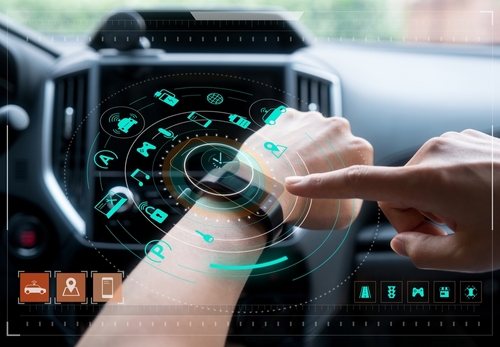
Smart Watch Use, Driving Distraction Laws, and HGV Fleet Policies
It’s illegal to drive while distracted in the UK, and your HGV fleet policy should reflect this. You should make it clear to all drivers in your fleet what is and isn’t allowed behind the wheel. And this should extend to smart watch use.
In this post we’ll explore the rules around using smart watches while driving, and discuss how your HGV fleet policy should reflect the driving distraction laws.
For more information on how we can help you and your fleet, get in touch with us on 020 8290 9099 or email us at
commercial.motor@anthonyjones.com.
What Are the Laws Around Using Smart Watches While Driving?
The
Highway Code Rule 149 makes it clear that you must not use any “hand-held interactive communication device” while driving, not even while you’re sitting in traffic.
The rule specifies that this extends to any device “capable of interactive communication”, mentioning mobile phones and tablets. Though it does not mention smart watches, a smart watch is very much a device “capable of interactive communication”. And though a smart watch is not strictly a “hand-held” device, it can be just as distracting as a smartphone or a tablet.
Penalties for Using Smart Watch While Driving
Even if it’s a bit of a legal grey area, if the police catch you interacting with your smart watch while driving or idling, you may get the same penalty that you’d get if you were scrolling on your phone: An on the spot £200 fixed penalty notice, and up to six points on your licence.
And if you’re involved in an accident as a result of looking at your smart watch? You could get a fine of up to £1,000, and you’ll probably invalidate your
commercial vehicle insurance too.
How Many Drivers In Your Fleet Wear Smart Watches?
A 2022 study by Venson Automotive Solutions found that
37% of drivers wear smart watches while driving. Smart watches have become more affordable and widespread in the years following this survey, so the number’s likely much higher now.
Under the
Health and Safety at Work Act, and the
Management of Health and Safety at Work Regulations, as a fleet manager you have a legal duty to manage and mitigate the many risks your drivers face on the road. This includes the risk of accidents as a result of distracting wearable tech.
So, as part of your duty of care as a fleet manager, you should include smart watch guidance in your HGV fleet policy.
How To Manage Smart Watches In Your HGV Fleet Policy
Your fleet policy should already cover the use of smartphones and other devices in the cab. But if your policy does not explicitly mention smart watches, your drivers might be unsure of where you stand. So, you could just update your policy so that this guidance explicitly mentions that drivers are not to use smart watches while driving, just like they cannot use smartphones.
This should be part of wider guidance on how your drivers should use in-cab technology:
- Drivers should only use tech that’s been officially authorised for use in the cab, such as sat-navs and tachograph devices.
- You should train every driver on the correct use of any and all in-cab tech.
- If your driver is using a sat-nav, they should programme it before they set out. If they need to make any changes to the route, they should pull over first.
- Drivers should also refrain from using any “interactive communication device” while idling in traffic. If they want to make a call, they should wait until they’re parked up, or they have reached their destination.
Other Driving Distraction Risks to Include in Your HGV Fleet Policy
There are a number of other risks that you may not have in your fleet policy which should be included:
- Drivers should not eat or drink while driving.
- Drivers may use the radio, but they should be aware of how loud volumes could distract them from driving and potentially annoy other road users.
- If there is anyone else in the cab, as part of a double manning arrangement for instance, then the passenger must take care not to distract the driver with excessive chatter, or through trying to show them images or videos on their device.
Of course, your HGV fleet policy should also outline your zero-tolerance approach to drink and drugs. Read our full guide to
drink and drug policies for fleets.
Specialist Fleet Risk Management From Anthony Jones
Steve Blackmore, Director at Anthony Jones says: “If a driver’s involved in an accident, and they’re found to have been using any kind of communication device, then you may be liable for certain damages – unless you can evidence your fleet’s policy on distracted driving.
“There are other benefits to evidencing your policy. For example, it will demonstrate to your insurer that you are committed to road safety, which may lead to lower premiums for your commercial fleet insurance.
“At Anthony Jones, we’re always happy to discuss strategic risk management with fleet managers. We’ll show you how you can get the best for your fleet, and we’ll help you access the specialist cover you need at a competitive price.”
For more information on how we can help you and your fleet, get in touch with us on 020 8290 9099 or email us at
commercial.motor@anthonyjones.com.
Find out more about our
HGV insurance, see if you can save on your insurance costs and
get a quote today.