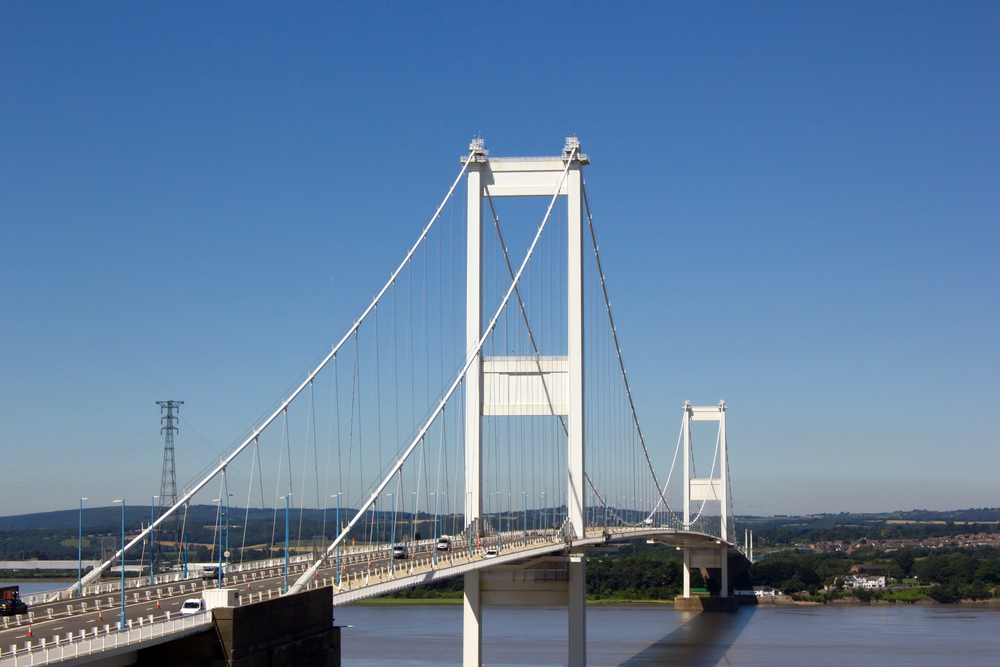
What Severn Bridge Reopening for HGVs in 2026 Means For Fleets
In May 2025,
vehicles weighing over 7.5 tonnes were banned from using the Severn Bridge. But it seems that this ban may be lifted at some point in August 2026.
In this post we’ll explore the underlying reasons for the initial ban, along with the specific plans for the reopening. We’ll also discuss how the Severn Bridge reopening could mean for your fleet.
For more information on how we can help you and your fleet, get in touch with us on 020 8290 9099 or email us at
commercial.motor@anthonyjones.com.
Why Was The Severn Bridge Closed to HGVs?
The Severn Bridge has been closed to all vehicles weighing 7.5 tonnes or more since May 2025. This decision followed some inspections that revealed deterioration to the bridge’s suspension cables.
Around 32,000 vehicles a day use the bridge. Previously, HGVs accounted for around 10% of this traffic. Since this ban, HGVs have been obliged to take the M4 Prince of Wales Bridge instead, which could add up to 14 miles to journeys.
New Severn Bridge Traffic Controls for HGVs
The Severn Bridge is expected to reopen for HGVs at some point in October 2026. In order to reduce the strain on the bridge’s cables, there may be new signal systems and traffic control measures in place. These may operate at junctions one and two of the M48, and will work to ensure that there are never too many HGVs crossing at any one time.
The proposed system will periodically “release” HGVs from junctions one and two of the M48, allowing limited and controlled access to the bridge. The idea is to have HGVs spread evenly across the bridge, rather than having them concentrated in close proximities, which could place undue strain on the bridge’s support cables.
What Do The Severn Bridge Changes Mean For Your Fleet?
In theory, this means that you could cut around 14 miles off certain journeys, which will help your fleet save time, while also cutting down on your fuel costs and your emission levels. But in practice, it’s not yet clear just how the new traffic control systems will work, and how they might impact HGVs.
National Highways has promised that this system will operate “freely” for the “vast majority of the time”, resulting in “very little delay” to HGV and car traffic. But it’s all too easy to imagine a backlog building up, especially in the early days as vehicles of all types get used to these systems.
Plus, if the system is only operating “freely” for the “vast majority of the time”, the implication is that there will be periods with even tighter traffic controls and even stricter limits on HGVs. Perhaps there will even be tolls for HGVs who wish to use the bridge at peak hours.
What Happens Next?
National Highways is currently engaging with a number of groups, including fleet and haulage businesses, in order to design an implementation plan that works for everyone.
Steve Blackmore, Director at Anthony Jones says:
“The specific plans for the Severn Trent Bridge will presumably become clearer in the following months. But one thing’s for sure: HGVs still won’t be able to take the Severn Trent Bridge for granted. Even once the ban is lifted, some fleet managers and drivers may still prefer to take alternative routes, so as to avoid any possible delays or added charges.
“As ever, fleet managers will have to be flexible, and many may find that the optimal route is not necessarily the shortest route.”
For more information on how we can help you and your fleet, get in touch with us on 020 8290 9099 or email us at
commercial.motor@anthonyjones.com.