What is the Legal Brightness of Headlights?
Do you feel like headlights are getting too bright? You’re not alone.
A 2025 government study found that
bright headlights are a “genuine issue” for drivers. So if you feel that headlights are getting brighter, it’s because in some cases, they are. But are bright headlights illegal? Or is this just the way things are now?
In this post we’ll discuss the legal brightness of headlights, and let you know how you can ensure vehicles in your fleet stay safe and compliant.
For more information on how we can help you and your fleet, get in touch with us on 020 8290 9099 or email us at
commercial.motor@anthonyjones.com.
What’s The Legal Brightness For Headlights In The UK?
The Road Vehicles Lighting Regulations 1989 does not specify a legal brightness for headlights. But it does specify that every light fitted to a vehicle must carry an approval mark. This might be an “E mark”, or a British Standards mark.
This mark will confirm that the light meets all safety regulations, which includes brightness levels. So, if the light is so bright that it would dazzle other drivers, then it would not have an approval mark, so it would not be legal in the UK.
Are Headlights Getting Brighter and More Dazzling?
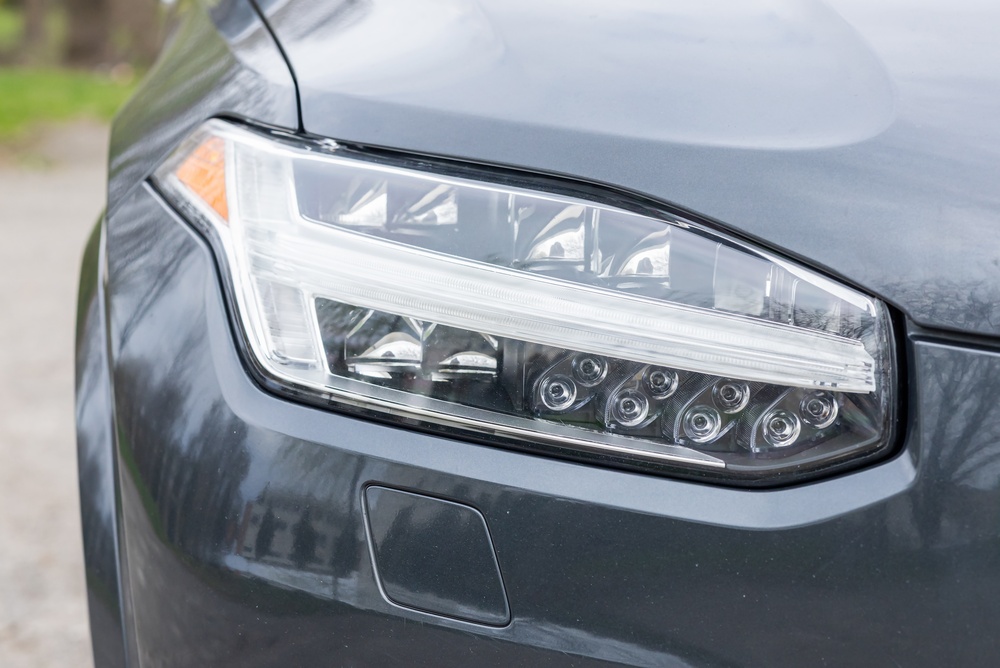
Headlights have got brighter in recent years. Most, if not all new vehicles are now fitted with LED headlights, which tend to be considerably brighter than traditional halogen bulbs.
We measure brightness in lumens. Traditional halogen bulbs shine with 24 lumens per watt. LEDs can shine with 200 lumens per watt. Plus, while traditional halogen bulbs were usually a warm yellowy colour, LEDs shine so brilliantly that they almost mimic natural daylight.
Finally, while light from a halogen bulb tends to scatter, light from an LED is much more directional. This is why it can often feel like oncoming headlights are shining directly into your eyes.
When Are Bright Headlights Illegal?
Some bright headlights are indeed illegal. A vehicle will never come fitted with excessively bright headlights as standard. But some people choose to retrofit their vehicles with brighter LED lights. These lights do not always carry an approval mark, and sometimes people fit LED lights to vehicles that were only ever intended to have halogen bulbs.
The DVSA recently announced plans to address the illegal retrofitting of LED headlights, with £1,000 fines for anyone caught driving with lights that do not meet the legal standards. Plus, they’ve announced that
any vehicle fitted with illegal headlights will fail its MOT.
How To Ensure Your Fleet’s Headlights Stay Safe and Compliant
There are a number of checks you can do and policies you can introduce to help keep your vehicles’ headlights compliant, including:
- Check for the approval mark. Make sure every light fitted to every vehicle in your fleet carries either the E mark, or the British Standards mark. If any vehicle in your fleet ever needs a replacement light, swap like for like, and use a reputable mechanic who you can trust to follow the regulations.
- Check for alignment. Sometimes, headlights may dazzle other road users because they’re misaligned. Make sure you check your vehicles’ headlight alignment as part of your ongoing checks and maintenance.
- Check the vehicle settings. Many modern vehicles have automated headlight systems. They may automatically come on when the light levels reach a certain level. If this system’s set to full-beam mode, then your drivers may be dazzling other road users without realising it. Also, some vehicles have systems that will automatically dip full beam lights if they detect oncoming traffic. These systems may dip headlights later than drivers usually would, so it might be best practice to encourage your drivers to take full control of their lights.
- Talk to your drivers. Make sure your drivers understand the risks associated with bright headlights, both for themselves and for other drivers. If any of your drivers report that they regularly feel dazzled and disorientated by bright headlights, support them in any way you can. This might extend to them taking an eye test, to ensure they don’t have any underlying conditions.
Can Bright Headlights Affect Your Vehicle Insurance?
As we mentioned above, if your headlights are misaligned, or if the wrong lights are fitted in your vehicle, the vehicle could fail its MOT. But how might headlight issues affect your insurance?
Steve Blackmore, Director at Anthony Jones says:
“If one of your drivers is involved in a collision, and the investigation finds that their vehicle was fitted with misaligned or unsuitable headlights, then the insurer may reject your claim.
“But at the same time, if you can demonstrate your commitment to road safety, such as through evidencing your maintenance schedules for your vehicles, and your staff training procedures, then you could potentially make a saving on the cost of cover.”
At Anthony Jones, we can help you ensure that your commercial fleet insurance covers you for all risks, and we can also show you how to evidence your risk management procedures to your insurers. For more information on how we can help you and your fleet, get in touch with us on 020 8290 9099 or email us at
commercial.motor@anthonyjones.com.